Legion Comps: Week One
What could possibly go wrong?
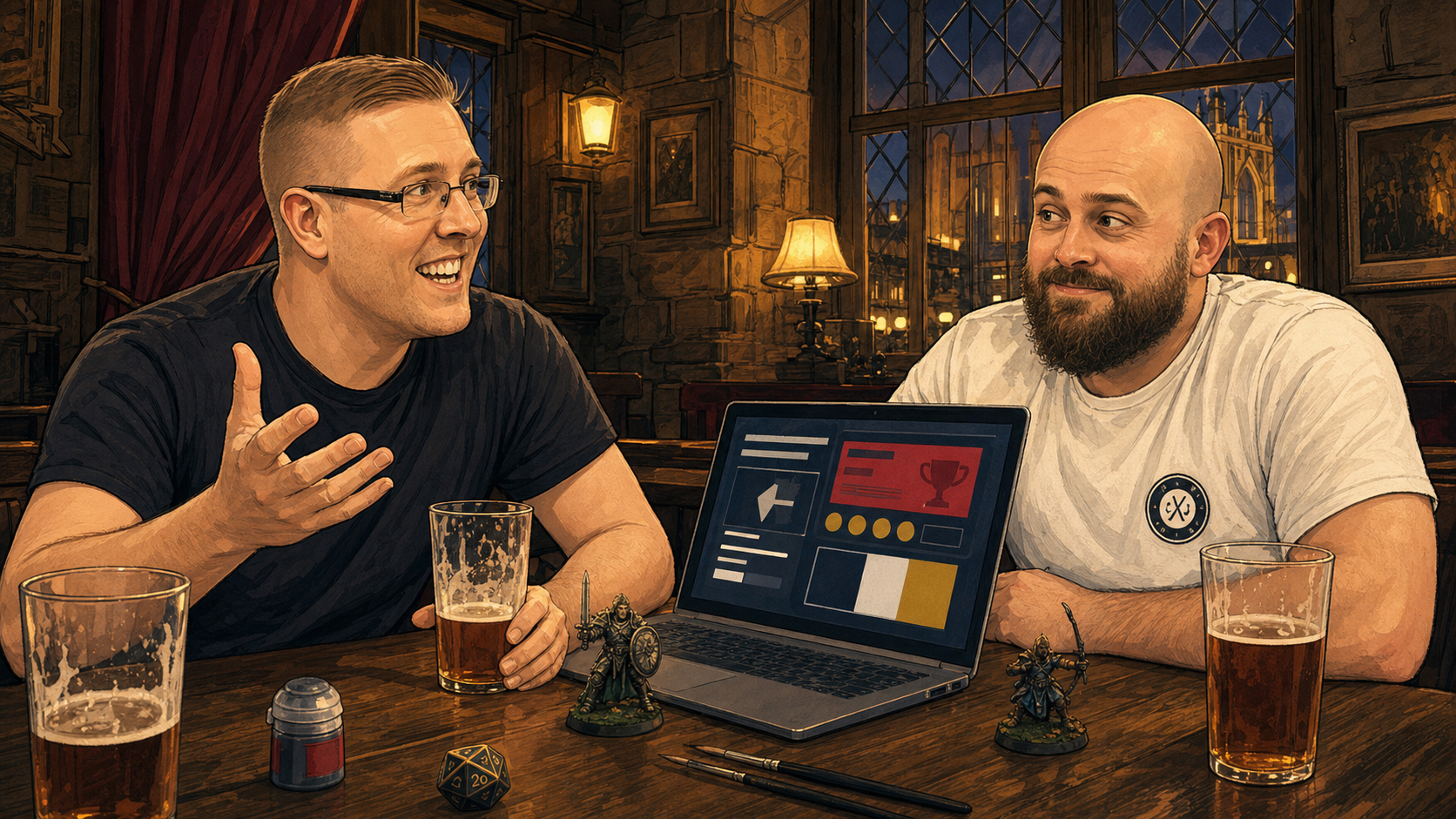
We'd like to say that Legion Comps began with a detailed business plan, extensive market research and several sensible meetings.
It didn't.
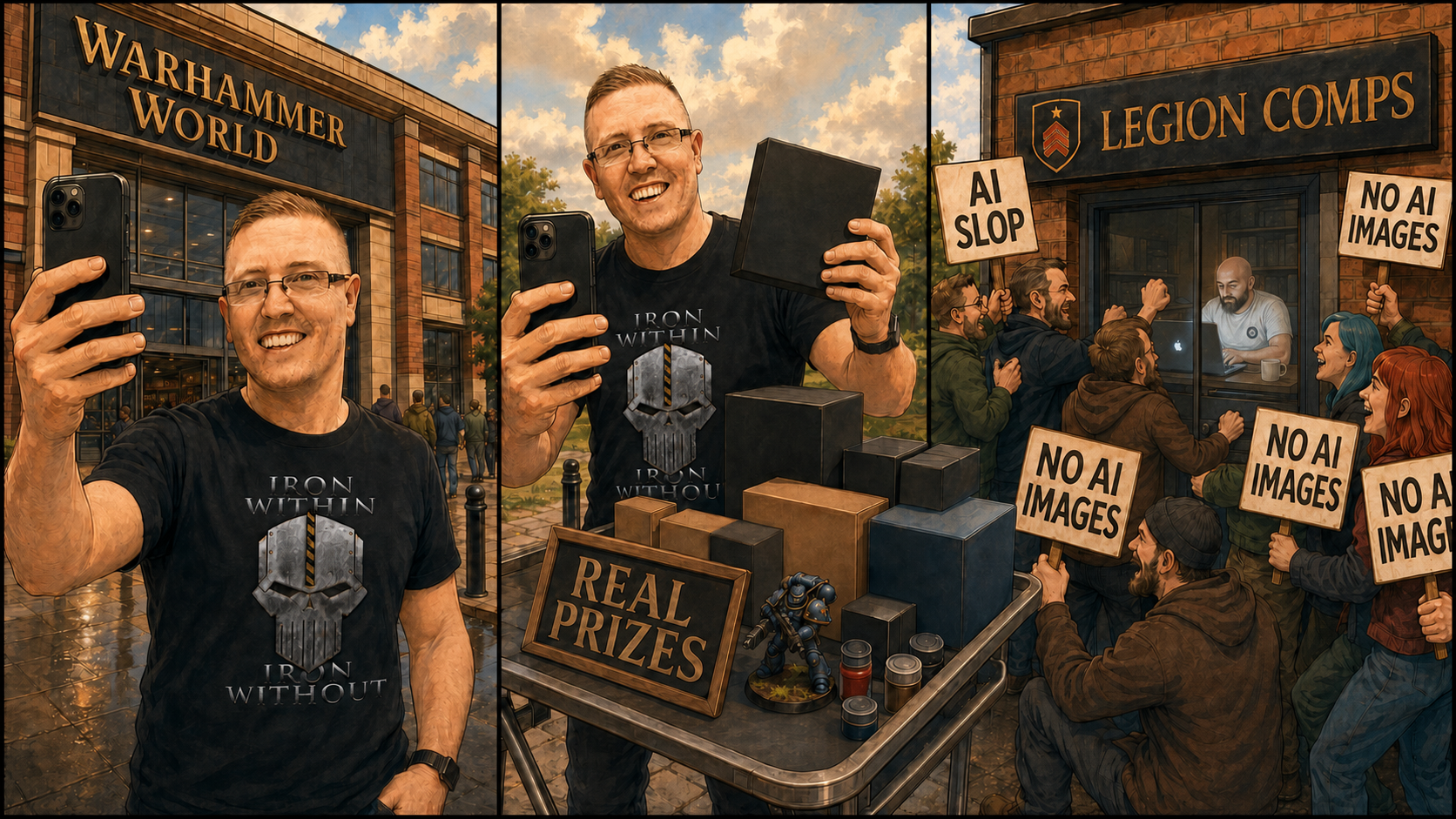
It began in York, several beers in.
1. The idea
Somewhere during that trip, Lewis came up with the idea of starting a competition business focused on Warhammer, miniature painting and the wider hobby community.
The aim wasn't to build another generic competition site filled with watches, cars and enormous televisions. We wanted to create something for hobbyists, painters, players and collectors.
Competitions would be the starting point, but the longer-term ambition was something bigger: a genuine home for the community.
At least, that was the pitch. Some of Lewis's words were becoming difficult to identify by this stage.
2. Back home
Most ideas born in a pub are supposed to remain there. This one followed us home.
Feeling strangely motivated by what I remember as Lewis's passionate speech, and what others might describe as slurring, I got to work.
As a software engineer, it was exactly the sort of project I wanted. I needed something new to sink my teeth into, and this looked like a good fit.
“Easy peasy,” I thought.
It was not easy peasy.
3. Building the platform
We knew that off-the-shelf competition platforms already existed, many of them built on WordPress. Using one would have saved us a considerable amount of time and several late nights.
Unfortunately, the engineer in me was curious. I didn't only want to run a competition site. I wanted to build one.
So we decided to start from the ground up.
I chose a technology stack that I knew well and began studying other competition sites. I looked at the features customers expected, the patterns that appeared everywhere and the parts that seemed more difficult than they needed to be.
Then the actual building started.
Progress had to fit around work, family life and all the other things that rudely refuse to pause when you start a business. After a few months of tapping away, we reached our minimum viable product.
The platform worked. We could create competitions, manage entries and run the draws. More importantly, we finally had something that other people could test.
There was only one fairly important feature missing.
We couldn't take any money.
4. The bank-account problem
Once your business plan contains words such as “prizes,” “draws” and “online payments,” opening a bank account becomes less straightforward.
Free draws and prize competitions are not automatically classed as regulated gambling. They must, however, meet specific legal requirements. Banks also apply their own risk rules, and our sector tends to make them nervous.
That was certainly our experience.
There weren't many banks willing to work with us. Those that were interested wanted more information, more evidence and more checks than you might expect from a normal business account.
Fortunately, we found a provider that understood the sector. The application process was long and involved several extra hoops, but we didn't mind too much.
It gave us time to prepare the equally cheerful mountain of paperwork needed for our payment provider.
5. The DNA Payments application
During our research, we noticed that many competition sites used DNA Payments. They are UK-based and authorised by the Financial Conduct Authority to provide payment services, so we decided to contact them.
The application itself was straightforward, although it wasn't quick.
We had several calls and meetings with their team. They wanted to understand the business, how the competitions would operate and whether we were a suitable partner.
The calls were informal, and the team explained what they needed from us at each stage. Although the process took time, we felt supported throughout it.
Then, one week before our planned launch, our main contact at DNA left the business.
Some of the communication briefly fell between the cracks. Another member of the team picked things up, but our launch was now two days away and more evidence was still needed.
What followed was an administrative sprint involving emails, documents and regular checking of the calendar, as though staring at the date might somehow slow it down.
We missed our original launch by a couple of days.
By then, we didn't mind. A secure, working payment system mattered more than an arbitrary date. Everything was finally in place, and Legion Comps was ready to go.
6. This is not Field of Dreams
Field of Dreams has convinced generations of people that building something is enough to attract a crowd.
That rule does not apply to websites.
You can spend months building a platform. You can test it, polish it and fill it with prizes. Then you can launch it and discover that absolutely nobody knows it exists.
We had new competitions, a new website and brand-new social accounts. Our existing audience consisted of Lewis, me and a few supportive friends and family members.
There was no mailing list, established following or community waiting for us. Everything was greenfield and home-grown, which sounds exciting until you realise that “greenfield” also means “empty.”
This was a tough but useful lesson. We had spent a great deal of time thinking about how to build the platform. We hadn't spent enough time thinking about how people would discover it.
Still, the competitions were live and we were determined to see them through.
We kept telling ourselves, “It's the first week. We're going to make a loss.” That was true, although repeating it didn't make the numbers look any prettier.
We turned our attention to social media and started getting Legion Comps in front of people. Slowly, the first ticket sales arrived.
By the end of the week, most of our competitions had received entries. We were genuinely chuffed.
The first week had borne fruit. It was fairly small fruit, perhaps a grape, but it was fruit all the same.
More importantly, real people had trusted a completely new business enough to enter.
7. The first draw
Draw night arrived with equal amounts of excitement and nerves.
Lewis and I were frantically messaging each other on WhatsApp.
“Everything ready?”
“Yes.”
“Are you sure?”
“No.”
We checked the competitions, the entries and the website more times than either of us would admit.
We had sold tickets, so our responsibility was clear. The draws would go ahead as promised, even though several competitions would leave us with a sizeable loss.
Thankfully, the website did exactly what we had built it to do. It drew the winners fairly and correctly from the ticket pools, without any last-minute disasters.
The relief was enormous.
Our first winners had been drawn. The platform had worked under real conditions, and months of development had led to an actual result.
Naturally, we opened a beer.
8. The first complaint
The celebration didn't last long.
A red bar appeared on our dashboard. Our complaints system had received its first real submission.
Nothing sobers you quite like the words “new complaint.”
The main issue involved wording on the website that had caused some confusion. That feedback was fair and useful.
The difficult part was the final comment, which questioned our integrity.
That was tough to swallow.
We built Legion Comps around fairness and openness. We publish our draws, and we designed the process so that the results can be reproduced independently. We also ran every promised draw, despite the financial loss, because keeping our word mattered more than protecting our first-week figures.
But good intentions don't make unclear wording clear.
If somebody misunderstood what we had written, then the wording needed attention. We replied, closed the case and took the lesson from it.
Trust isn't earned by telling people that you are trustworthy. It comes from being clear, keeping your promises and responding properly when somebody challenges you.
So, was week one a success?
Financially? Absolutely not.
We made mistakes. We underestimated the work needed to find an audience. We took losses, endured a stressful draw night and received our first complaint before the celebratory beer had time to go warm.
But the platform worked.
People entered. Winners were drawn. We honoured every competition, learned a great deal and made it through the first week with the business and our friendship, still intact.
Now we get to do it all again.
Only this time, we're slightly wiser.
Probably.